Nowadays, more and more retailers are using 3D rendering to showcase their products in a more immersive way: they’ve realised that people’s shopping experience goes beyond just static photos.
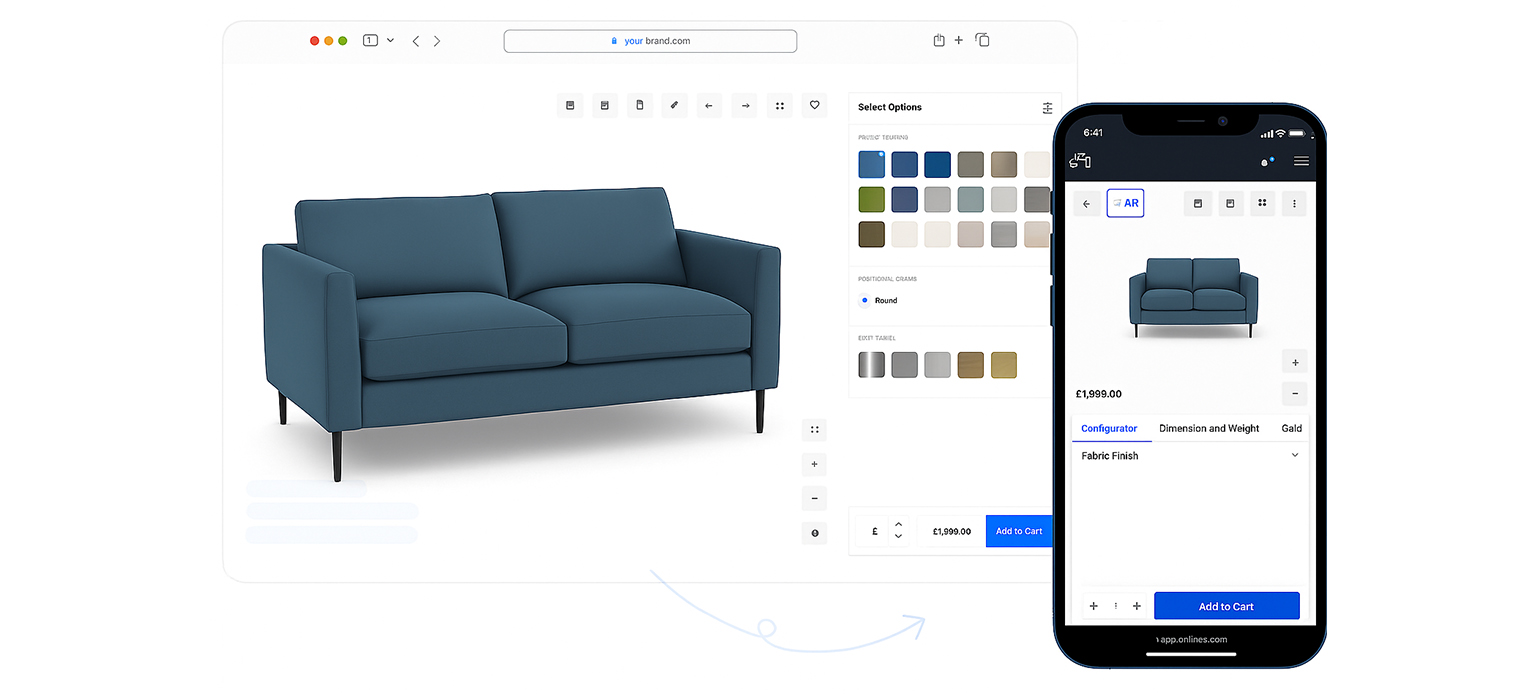
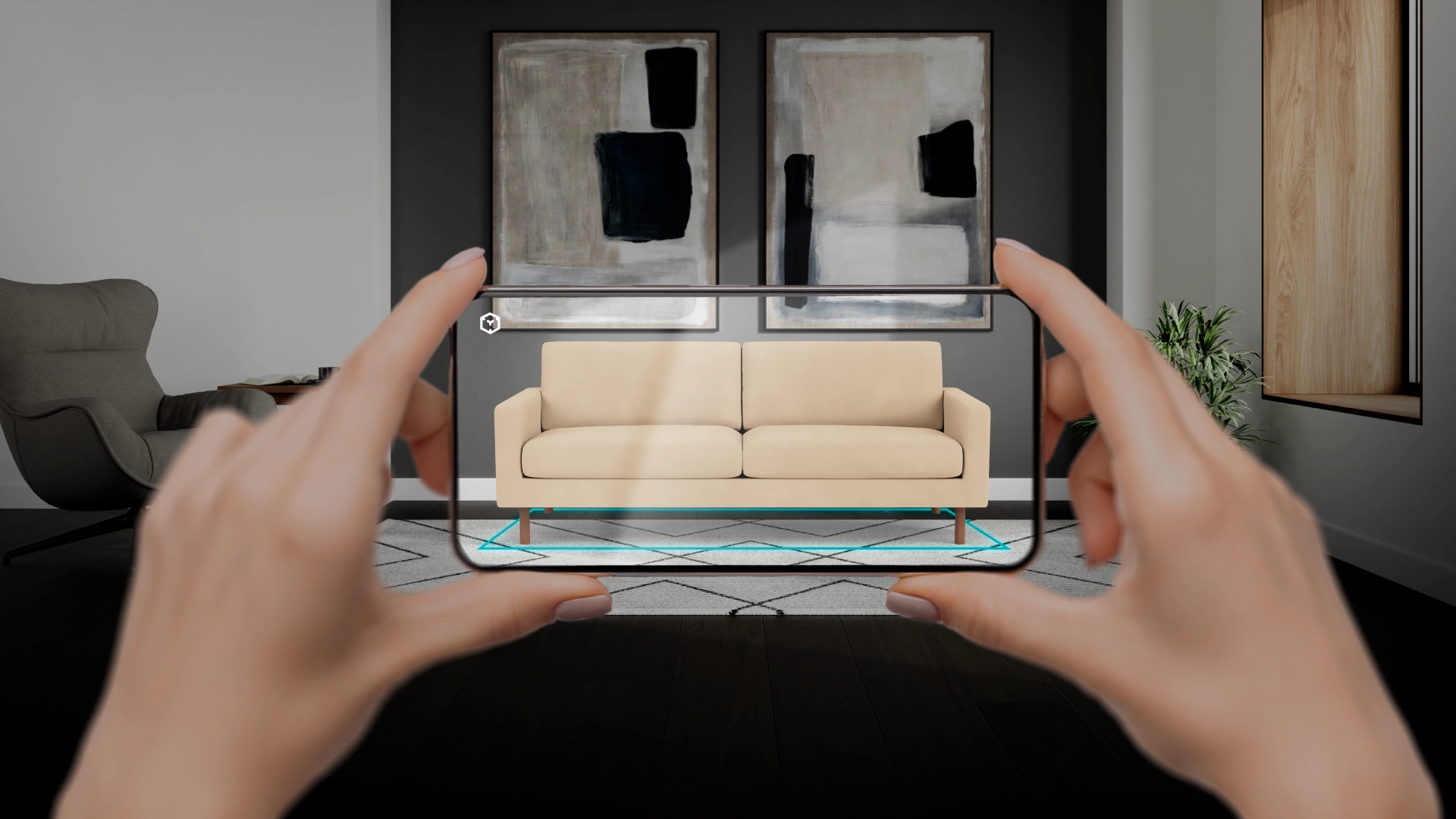
Made with a creative and technical process, 3D rendering can totally enhance the ways that your customers interact with your products. Through an augmented-reality 3D render, shoppers can see how your products would look in their own space just simply via their mobile phone – this is exactly why 3D rendering is transforming E-commerce, as we speak.
In this article, we’ll break down our process behind 3D rendering, its benefits to E-commerce websites and we’ll also compare it to other photography methods, such as traditional photography and AI generated images. We’ll also touch on how other retailers are using 3D rendering and how Morf Visualiser has led clients to better conversions.
What Is 3D Rendering?
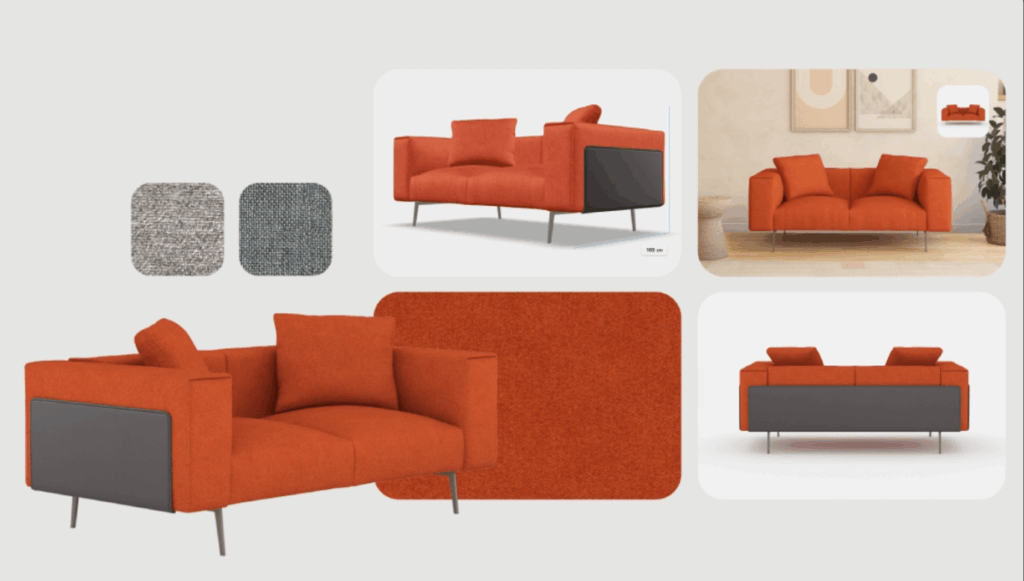
3D rendering is cutting-edge technology that transforms the ways your customers interact with your products on your E-commerce website. No matter what kind of physical products you sell, your customers can view them through augmented reality and have full 360° visualisation of them – dropping the showroom experience right into their living room.
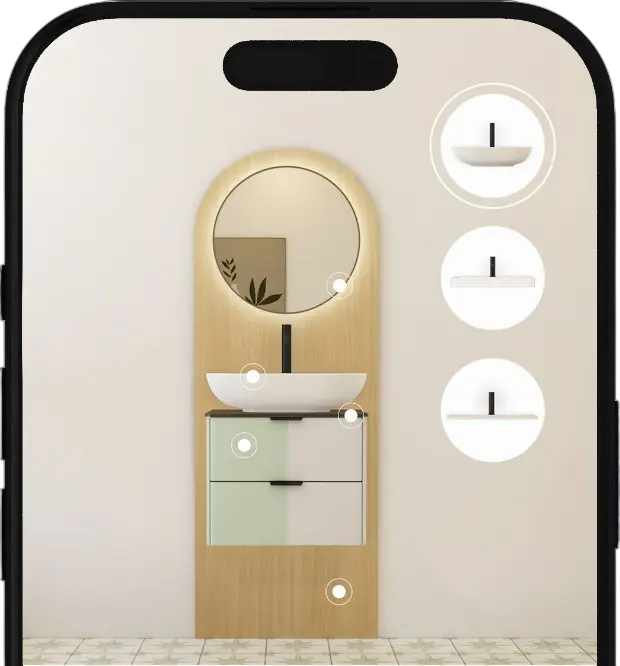
With our photorealistic 3D rendering, your customers will be able to see all angles of your products and discover how they’d appear within the comfort of their own home. From colours, textures, lighting and all of your other products’ variants, 3D rendering realistically simulates all the details of your products. It’s sure to convert the casual every day browsers into consistent and confident buyers!
Behind The Scenes: The Creative & Technical Process Of 3D Rendering
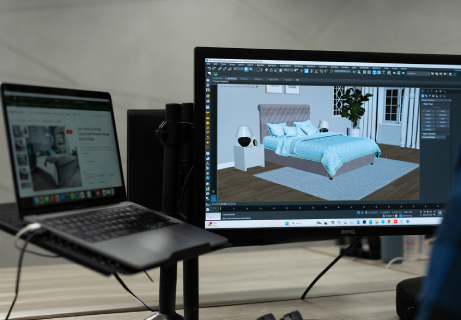
Behind every 3D render, there is a strategic process that’s both technical and creative. It starts by taking your product, such as your furniture or jewellery, and we use a digital software we use 3DS max to create all of the assets of your product. We size up your product with its scale and proportions, ensuring that it’s realistic and true to size.
This process also involves “UV mapping,” where we unwrap a 3D object so it’s two dimensional – this allows us to precisely add details such as texture, light responses, fabrics and colour tones. By adding a whole new layer of realism to your products, buyers can get a true insight into how they’d look in their living space.
After these 3D rendered assets are created, we integrate them with your brand and add them to your website, with every unique configuration having its own URL link. This is very beneficial for SEO, since every one of your assets such as colour, fabric, finishes and textures can be indexable for search engines – giving your products more opportunity for discovery.
What Are The Benefits Of 3D Rendering For Your E-commerce Website?

3D rendering offers countless benefits for your E-commerce website. It can totally transform the ways in which your users interact with your products, just simply with a click of a button.
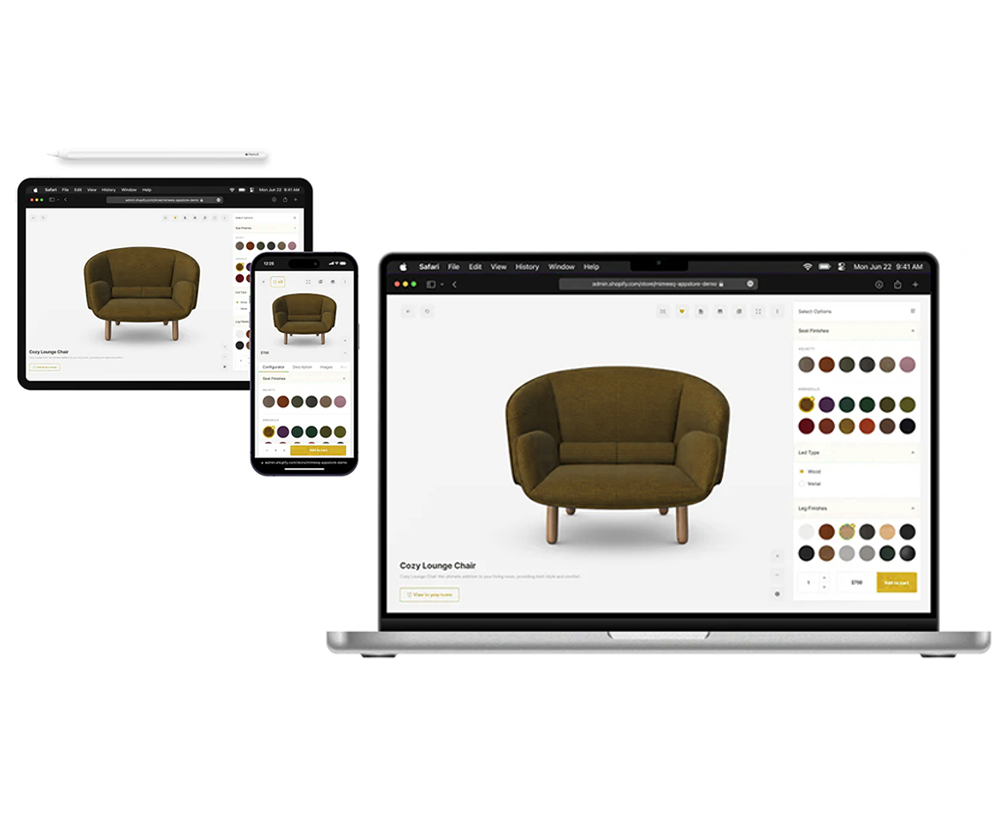
The sophistication of 3D rendering is seamless and fun to use, as customers change variants on your products such as colour and size, discovering what they’d look like in their own home. This can lead to more time being spent on your website by your customers, which can be a game-changer for increased sales volume.
Plus, when customers are able to see all angles of your product and their different textures, whether that’s furniture, jewellery or clothing, they are left with a better understanding of what they look like. This can increase more trust from your customers in your product range, which is crucial when it comes to generating new sales.
Outside of your website, 3D rendering can also serve as a powerful and immersive marketing strategy. In marketing campaigns such as newsletters, social media and digital ads, 3D rendering can support your branding and take your product sales to the next level – customers can easily interact with them in an authentic way before even landing on your website. It’s sure to set you apart from other retailers!
Traditional Photography vs 3D Rendering
3D rendering can completely transform and enhance your users’ experiences, giving them an extra layer of realism and interactivity between them and your products. That’s not to say that traditional photography isn’t needed – in fact, it’s an essential art for making your product photos impactful.
However, 3D rendering brings a new set of unique advantages to the table: customers can experience your products as well as just see them. By rotating your products 360°, customers can see them from all angles – they’re able to get a true sense of their fabrics, colour tones and proportions.
Another bonus of 3D rendering is the fact that it can save you and your professional photographers hours of time when constantly reshooting products. Large businesses simply don’t have the time to always do this process, so more and more of them are also using 3D rendering to display their products in a more versatile way.
An example of a big corporation that does this is Ikea, with their newly integrated “Ikea Place” that allows customers to try their products in their room using their mobile. We have a separate article where you’ll be able to dive deeper into the differences between Morf Visualiser and Ikea Place, so you’ll be able to have a better insight into how they both work – but for now, we’ll stay on topic with how our 3D rendering works for e-commerce.
Of course, with conventional photography, the 3D experience is not achievable as they’re just static photos, but they’re still essential ways to showcase your products. Combining both photography and 3D rendering together is the next step for increasing customers’ browsing time, trust and sales.
AI vs 3D Rendering
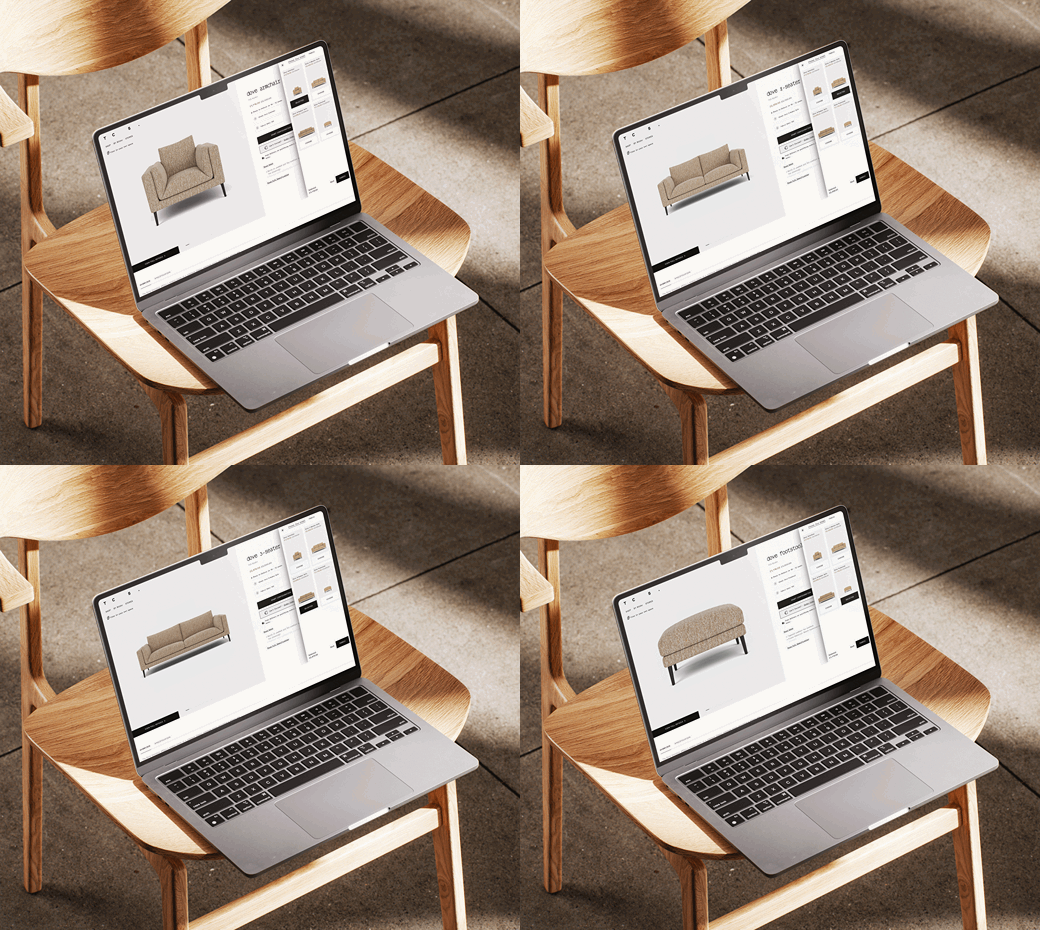
In this day and age, more and more businesses are using AI as a handy tool to create images for their products. With a simple quick prompt, you can generate any 2D static image in just a matter of seconds. It’s pretty amazing for E-commerce businesses who need a lot of images for their thousands of products.
However, even with static images, AI can make mistakes: generated imagery of furniture can look convincing at first glance, until you look closer and something feels slightly off with the proportions of the sofa, the fabrics don’t look quite, or the light wouldn’t fall on it naturally in that way.
When it comes to 3D rendering, AI is still very much in its infancy. It doesn’t yet understand the intricacies of scale, proportion and geometry, as well as smaller details such as the texture of fabrics and how the object would look under different lighting.
Thanks to our process of UV mapping, we can capture all of these details accurately. With 3D rendering, users can also interact and rotate your products, making product customisation and visualisation more seamless. AI generated images are limited when compared to this augmented-reality experience, since the customers cannot control exactly which environment a product sits in, or see all of its angles.
Our Results: How Morf’s 3D Renders Have Transformed E-commerce Websites
We have worked with various clients to improve the relationship between their customers and their product range. Let’s take a look at some of our success stories and how 3D rendering has made a real difference to their sales
Aspire Store
Based in West Yorkshire, Aspire Store is widely known for its selection of handcrafted beds and sofas. They faced a challenge in showcasing their high-quality fabrics online, and the level of craftsmanship that goes into making them. Our solution was to make their products come to life.
This was achieved through 3D rendering, with their immersive “Build Your Bed” product selection, where customers can select their own bed size, fabrics, colours and headboards – they can really get to the heart of what they want out of the product.
This flawless system led to a 60% boost in conversion rates, with an 83% increase in product interactions and 180+ model builds – our 3d renders are proven ways to transform customers’ shopping experience.
Furl
Based in Nottingham, Furl have a wide selection of storage beds, sofas and tables that are created with luxurious quality. Furl wanted to enhance their customers’ digital shopping journey by implementing our 3D rendering software, and we created an immersive augmented reality system where customers can simply drop their products in their bedroom via their mobile phone.
This resulted in 100k+ rendered images, an 80% boost in product interactions and a 30% reduction in fabric sample orders, as customers had already trusted what their products looked like.
To learn more about our impacts on ecommerce businesses, why not take a look at some of our other success stories with our clients?
Discover What Our 3D Renders Are Capable Of Now
3D rendering goes beyond customers seeing and browsing your products – it’s also a way for them to connect and experience them. We’ve discovered the innumerable benefits of 3D rendering: from building trust with customers to increasing their time spent on your website, we’ve proven how it can lead to a huge growth in conversions.
More and more customers will remember interacting with your products with 3D rendering. It’s truly a unique advantage that can set you apart from other retailers with this immersive and photorealistic buying experience.
Get in contact with us and chat about your next project – we look forward to transforming your products’ visualisation on your website!